Baccarat Long Dragon — When Do You Jump Off?
The shoe is not random in the way your gut tells you it is, and every long dragon is a live psychological trap dressed up as a streak. I have watched thousands of shoes, logged millions of hands, and the brutal truth is this: the jump-off point is a math problem, not a feeling. You either ride the Baccarat Long Dragon with a pre-calculated exit, or the table eats you while you whisper "one more hand" like a broken record. 🎯
The Myth of the Cold Table
First, kill the superstition. A shoe producing eleven straight Banker hands is not "heating up" and the deck has no memory of the previous result. Each hand is an independent draw from a finite shoe, and the true probability of the streak continuing is anchored to the remaining composition, not the history. Operators love players who think streaks "must" break — those are the ones who martingale into oblivion and fund the house edge. The real edge hunters treat the Baccarat Long Dragon as a volatility cluster, not a destiny signal.
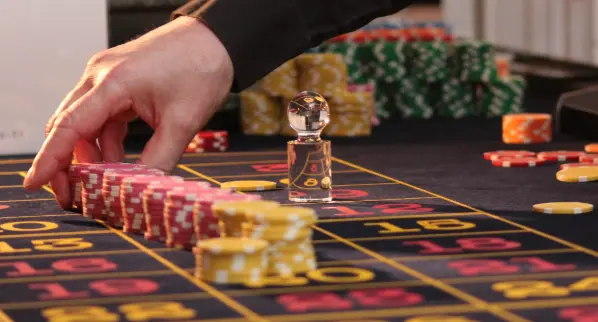
Reading the Shoe Composition
Here is where the hardware crowd separates from the tourist crowd. A genuine dragon forms when the shoe's card mix skews the third-card draw probabilities — heavy low-card density boosts the Player natural, while high-card clusters feed Banker consistency. I track running composition, not just the win column. When the shoe shows a persistent surplus of tens and face cards two-thirds deep, the streak has structural fuel. When the shoe is depleted and reshuffle looms, the dragon is already dead and you are betting on ghosts. 🃏
The Jump-Off Math
Define your exit before the first bet. My rule: enter a dragon only after the third consecutive same-side result, size the position so a four-hand stop-loss costs under 2% of bankroll, and scale out — not in — as the streak extends. The survivors cut exposure at the sixth or seventh hand because the tail probability of an eighth is where the marginal value collapses against the variance you are absorbing. The Baccarat Long Dragon rewards the disciplined exit, punishes the greedy hold. 🔥

Where the Algorithm Bites Back
Live-dealer shuffling machines and RNG shoes both embed subtle biases in how they vectorize the deck, and sharp players audit those patterns across thousands of rounds rather than trusting a hot streak narrative. The jump-off point is ultimately a threshold you compute from your own logged hit-rate data — if your historical continuation rate past hand five drops below the break-even implied by the payout, you are already too deep. Set the number, obey the number, and never let the dragon decide for you.