USA Texas Poker Room Tournament Buy In Structure vs Cash Game Difference
The USA Texas Poker Room Tournament Buy In Structure is not a courtesy fee — it is a rake-embedded trap that bleeds your stack before the first hand is dealt. Walk into any Texas card room and you will see the same dirty mechanic: a tournament buy-in that bundles a prize-pool portion with an administrative slice, and a cash game drop that operates on a completely different extraction model. The Cash Game Difference in USA is not cosmetic. It changes your hourly expectation, your variance curve, and your survival math. Ignore it and you are donating.
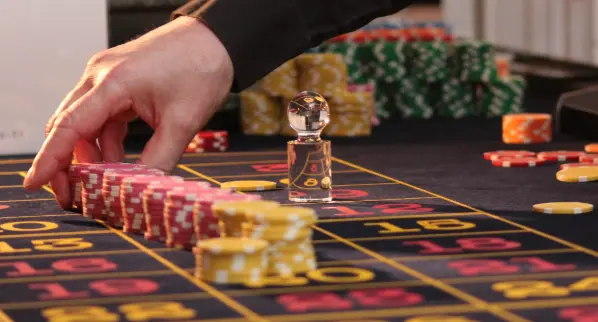
Where Tournament Buy-Ins Actually Go
Texas rooms love the $150 to $300 buy-in band because it hides the real cost. Break the structure down and you find three layers: the prize pool, the house fee, and the dealer appreciation add-on. That last one is the silent killer. Rooms advertise a $200 buy-in but the actual cost to compete with a full stack runs $240 once you add the staff fee and the optional double-chips. The USA Texas Poker Room Tournament Buy In Structure is engineered so the advertised number is never the real number. Sharp players calculate cost-per-blind-level, not sticker price. A $200 buy-in with 20-minute levels and a 15,000 starting stack gives you roughly 75 big blinds — fine. The same $200 with 12-minute levels and a 10,000 stack gives you 50 big blinds and a turbo death spiral. The structure, not the buy-in, decides whether you have play.
The Cash Game Drop Model Is a Different Animal
Cash games in Texas do not charge a buy-in fee. They take a per-hand drop or a time charge, and that distinction rewires your entire strategy. A $1/$3 no-limit game with a $6 max drop means every pot you win loses a fixed slice — so you must win bigger pots less often. Tournament structures reward survival; cash games reward aggression against a fixed extraction rate. The Cash Game Difference in USA comes down to this: tournaments tax your entry, cash games tax your wins. Players who confuse the two bleed chips by playing cash like a tournament — folding too much, waiting for premiums while the drop eats their blinds alive. 😤

Fee Compression and the Real Hourly
Run the numbers on a $250 tournament with a $40 house fee and a 100-player field. The prize pool is $21,000 and your expected return, assuming average skill, is negative before a single card is pitched. Now run a $1/$3 cash game with a $6 drop and 30 hands per hour: that is $180 per hour leaving the table, split among nine players — roughly $20 per player per hour in pure extraction. The tournament fee is a one-time hit; the cash drop is a recurring hemorrhage. Texas rooms know this and push tournament traffic because the fee is collected upfront and the variance keeps recidivism high. Cash game regulars who track their drop-adjusted hourly know the truth: a $6 max drop at low stakes is survivable only if you are winning 60% of your sessions. Anything less and the house owns your roll. 🎯
Blind Structure Mathematics That Break Fields
Look at the blind escalation in a typical Texas weekly. Levels jump 100/200 to 200/400 to 300/600 with no ante until level six. That missing ante is a structural gift to tight players and a disaster for aggressive stacks. Once antes kick in at level seven, the cost per orbit jumps 40% overnight and short stacks are forced into marginal shoves. The USA Texas Poker Room Tournament Buy In Structure is designed to compress the field fast so the room can start a new flight. Compare that to a cash game where blinds never move and your stack depth is constant — no forced escalation, no artificial clock. That is the core mechanic difference: tournaments impose a countdown, cash games impose a drop. One punishes patience, the other punishes passivity.
Add-Ons, Re-Entries, and Hidden Equity
Re-entry tournaments in Texas inflate the prize pool but dilute your equity if you fire multiple bullets. A $200 buy-in with unlimited re-entry through level six means the field is effectively deeper-stacked than the structure advertises. Players who re-enter twice are paying $600 for the same starting stack a single-entry player got for $200 — and the house fee is collected every time. Cash games have no re-entry tax; you buy in for the max and the drop is the only recurring cost. The structural edge belongs to the player who understands that tournament buy-ins are a subscription, not a ticket. 💰
Session Length and the Drop Clock
Tournament structures force a fixed session length — you play until you bust or win, and the clock is the house's weapon. Cash games let you leave whenever the drop-adjusted hourly turns negative. A Texas cash regular who plays four hours at a $6 drop pays roughly $80 in extraction over that session; a tournament player pays the fee once but is locked in for five to eight hours with escalating blinds that erode stack depth geometrically. The math is brutal: tournament structures reward early accumulation and punish late patience, while cash game drops reward table selection and punish seat-warmers. Track your cost per hour in both formats and the structural truth surfaces fast — one format taxes entry, the other taxes every pot, and only one of them lets you walk away mid-bleed.